Log In

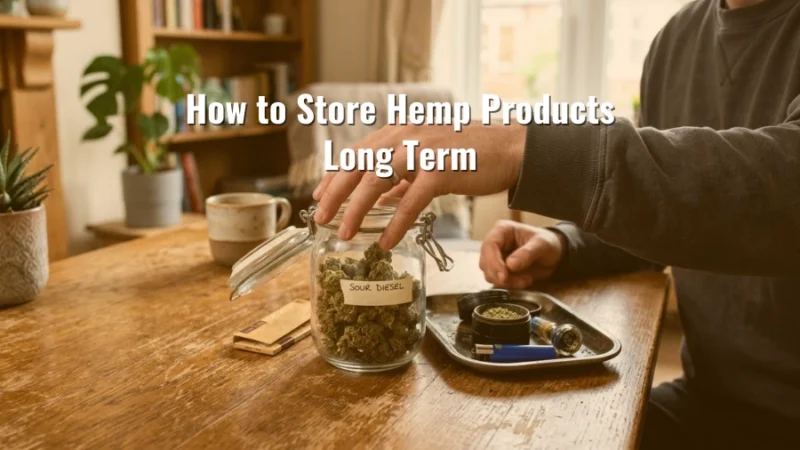
Hemp and cannabis products do degrade over time — but how fast, and by how much, depends almost entirely on how you store them. Under poor conditions, flower can lose a significant portion of their potency and terpene content within a few months. Under proper conditions — cool temperatures, controlled humidity, an airtight opaque container — quality hemp flower can maintain most of its cannabinoid profile for twelve months or longer, and some product types last considerably further.
This guide covers the storage science and practical methods for every major hemp product category: THCA flower and pre-rolls, vape cartridges and disposables, gummies and edibles, tinctures and oils, and concentrates. If you’re in Texas and stocking up ahead of the March 31, 2026, smokable hemp rule change — which restricts the retail sale of intoxicating hemp products in smokable form — the section near the end of this guide covers specifically how to build and manage a long-term personal supply. Possession of products you already own remains lawful; this guide helps you protect that investment.

Table of Contents:
- The science of cannabinoid degradation — what actually happens to your stash
- The five universal rules of long-term cannabis storage
- How to store THCA flower and hemp flower long term
- How to store vape cartridges and disposables
- How to store gummies, edibles, and infused products
- How to store tinctures and oils
- How to store concentrates and dabs
- The Texas stocking-up playbook: what to buy and how to store it before March 31
- Quick-Reference Storage Table
- Frequently asked questions
The Science Of Cannabinoid Degradation — What Actually Happens To Your Stash
Hemp and cannabis products begin degrading the moment they’re harvested. Understanding the mechanism behind that degradation is the fastest path to stopping it.
What Causes Potency Loss
Cannabinoids like THC, THCA, CBD, and Delta-8 THC are organic chemical compounds, and like all organic compounds, they are unstable over time. The primary degradation pathway for THC is oxidation — exposure to oxygen converts THC into cannabinol (CBN), a mildly psychoactive compound. For THCA flower specifically, heat exposure triggers decarboxylation, converting THCA into Delta-9 THC, which then continues to degrade. This matters both for potency and, under Texas’s new total-THC formula (which counts THCA at a 0.877 multiplier toward the Delta-9 threshold), for legal classification.
Terpenes — the aromatic compounds responsible for the flavor, aroma, and entourage-effect characteristics of different strains — are even more volatile than cannabinoids. They begin evaporating at room temperature and are often the first quality indicator to decline. A product that still tests well for cannabinoid content may have lost the bulk of its terpene profile simply from exposure to open air.
The Four Enemies Of Freshness
Scientific research on cannabis stability consistently identifies four environmental factors as the primary drivers of degradation: light, heat, oxygen, and humidity. Of these, light is the most damaging. A study by Fairbairn, Liebmann, and Rowan published in the Journal of Pharmacy and Pharmacology in 1976 — one of the most cited papers in cannabis stability research — found that light exposure was the single greatest factor in cannabinoid breakdown, surpassing both heat and oxidation as an independent variable. UV radiation cleaves the molecular bonds in cannabinoids directly, converting them into inactive byproducts at a rate that far exceeds what heat or air exposure achieves on their own.
Heat accelerates every chemical reaction involved in degradation. A 2022 study published in Frontiers in Chemistry confirmed that CBN formation rates are approximately six times faster than the rate at which THC appears from THCA decarboxylation — meaning your product shifts toward a more sedative, less potent profile before it loses its cannabinoid content entirely. For practical storage, keeping products below 77°F (25°C) meaningfully slows this cascade. Ideal temperature range for all hemp products is 60–70°F (15–21°C).
Oxygen drives oxidative degradation, which is why airtight sealing is the single most important physical step in storage, regardless of product type. And humidity is a double threat for flower specifically: too high (above 65% relative humidity) and you risk mold and mildew; too low (below 55% RH) and trichomes become brittle and break off, reducing both potency and quality.
The Numbers: How Much Potency You Actually Lose
The most comprehensive longitudinal data on cannabis potency loss comes from a study by Ross and ElSohly published in the UNODC Bulletin on Narcotics. Their research found that cannabis stored in closed containers in the dark at room temperature loses approximately 16.6% of its THC content after one year, 26.8% after two years, 34.5% after three years, and 41.4% after four years. In other words, proper dark storage alone — without vacuum sealing, humidity control, or refrigeration — preserves the majority of cannabinoid content for multiple years.
Research from Anresco Laboratories adds a critical container-specific finding: cannabis stored in amber glass jars retained approximately 11.6% more THC over 360 days compared to cannabis stored in clear glass containers receiving identical treatment. UV-filtering containers make a measurable, quantifiable difference. Boveda’s third-party lab research on humidity-controlled storage found that samples stored with 62% relative humidity packs retained approximately 18% more terpenoids and 23% more cannabinoids compared to uncontrolled samples over the same period.
A 2022 study published in PubMed found that vapor-phase terpenes with antioxidant properties can actually mitigate oxidative degradation of cannabinoid content, reducing degradation by up to 47.4% in accelerated stability testing. This is part of why keeping flower intact (rather than ground) and stored in a way that preserves its terpene environment helps it last longer. The terpenes themselves are doing protective work.
The Five Universal Rules Of Long-Term Cannabis Storage
These principles apply across all hemp product categories. Every product-specific section that follows builds on these foundations.
Keep everything cool. Storage temperature should stay between 60°F and 70°F. For Texans dealing with summer ambient temperatures of 95–105°F and homes that may be warmer than expected overnight, this matters: a garage, a car, a windowsill, or an uninsulated closet can all reach temperatures that meaningfully accelerate degradation. Interior closets away from exterior walls, particularly in air-conditioned spaces, are the practical sweet spot for most people.
Block all light. Even indirect ambient light causes UV-driven degradation over time. Opaque or UV-blocking containers are not optional for long-term storage — they are the highest-impact single investment you can make. Amber glass, stainless steel, and purpose-built UV-blocking plastic containers (like CVault or TightVac) all qualify. A clear mason jar on a bright shelf is among the worst storage choices for anything beyond a few days of use.
Seal it airtight. Oxygen exposure drives oxidative conversion of THC to CBN. Every time a container is opened, fresh oxygen enters. For long-term reserves, minimize access. Split a large quantity into smaller containers so your daily-use supply is in one jar that gets opened regularly while the reserve stays sealed.
Control humidity for flower. The ideal relative humidity for hemp flower storage is 59–63% RH. Boveda and Integra both make two-way humidity control packs that maintain a specific RH level inside a sealed container. A 62% pack is the standard recommendation for most storage; a 58% pack is better if you’re in a high-ambient-humidity environment like coastal Texas or if you’re storing for extended periods where you want slightly drier conditions to reduce any mold risk. A small digital hygrometer inside the container lets you confirm the RH is stable.
Minimize handling. Physical contact breaks trichomes. Trichomes are where the cannabinoids and terpenes live. Every unnecessary open, stir, and handle reduces the surface integrity of the flower and releases terpenes into the air. Pack your storage quantities once and leave them alone.
How To Store Thca Flower And Hemp Flower Long Term
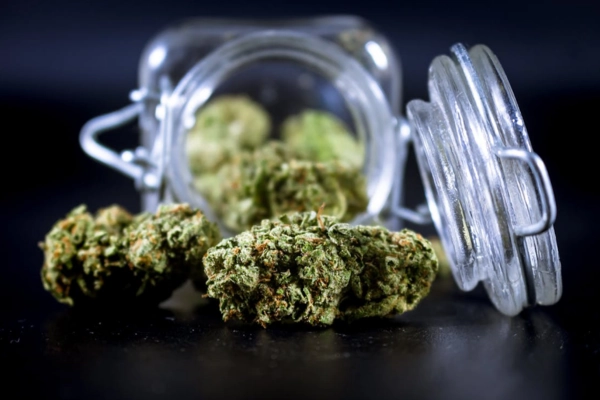
THCA flower stored properly can maintain most of its cannabinoid and terpene profile for twelve to twenty-four months. Stored improperly — in a plastic bag on a warm shelf — it can degrade noticeably within six to eight weeks. The difference is entirely in container choice, temperature, and humidity management.
Container Selection
The best containers for long-term flower storage are wide-mouth amber glass mason jars, CVault stainless steel containers, or TightVac vacuum-seal containers. Each has a distinct advantage. Amber glass is inert, non-reactive, doesn’t leach chemicals, and blocks UV. CVault is stainless steel — fully opaque, airtight, and designed with a humidity pack holder in the lid that keeps the pack elevated above the flower. TightVac creates a partial vacuum that removes some of the oxygen from the headspace without requiring a dedicated vacuum pump. If you’re using standard mason jars, a FoodSaver jar attachment can create a vacuum seal at a fraction of the cost of a vacuum chamber.
Avoid plastic bags of any kind for storage beyond a few days. Standard ziplock bags are not airtight — they allow gas exchange slowly over time — and many plastics produce off-gassing that can affect flavor. Silicone bags are better than plastic but still not the ideal long-term solution.
Humidity Control
A Boveda 62% RH pack placed inside a sealed container will maintain flower at the optimal humidity range without any monitoring required. One standard-size pack is sufficient for a half-ounce in a pint mason jar; scale up proportionally for larger quantities. Boveda packs last approximately two to six months depending on ambient humidity before they need replacement — you’ll know they’ve been exhausted when the pack feels fully rigid rather than slightly malleable. Integra Boost packs are an alternative with broadly similar performance; both brands are reliable and either will serve you well.
Temperature And The Texas Storage Challenge
Austin and central Texas present a real challenge for cannabis storage because interior ambient temperatures during summer months can exceed the 70°F ideal even in air-conditioned homes, particularly in upstairs rooms, garages, or non-central areas. For serious long-term storage, a small wine cooler set to 60–65°F is an efficient and low-cost solution. Wine coolers maintain low, stable temperatures, create darkness, and have low vibration compared to standard refrigerators — all of which benefit long-term storage. Keep the wine cooler in an interior room, not a garage.
The Thca Decarboxylation Risk For Texas Consumers
This is a storage consideration that no mainstream cannabis storage guide addresses but that is directly relevant to Texas THCA flower purchasers. THCA converts to Delta-9 THC through decarboxylation — a process triggered by heat. Under Texas’s new DSHS testing methodology, the total THC value of a product is calculated as 0.877 multiplied by the THCA content plus the Delta-9 THC content. Flower that tests as compliant at the point of purchase can, in theory, shift its calculated total-THC value through heat-driven decarboxylation in storage.
The practical implication: storing THCA flower in a warm environment doesn’t just degrade it — it actively converts it in a way that changes its calculated cannabinoid profile. Keeping your THCA flower below 77°F in a stable environment isn’t just about preserving potency. It also preserves the chemistry of the product as it was when you purchased it. This is one more reason why cool, dark, stable storage is the standard rather than a nice-to-have for THCA products specifically.
Pre-Roll Storage
Pre-rolls are more vulnerable than loose flower for two reasons: they have a larger surface area exposed to air within the paper, and they can’t be resealed the way a jar of flower can. For short-term storage (under two weeks), a dedicated pre-roll tube is adequate. For longer storage, pre-rolls should be sealed in an airtight glass container with a humidity pack, lying flat to prevent damage to the paper. Pre-rolls stored upright tend to settle, which can create a loose draw or uneven burn over time.
Should You Freeze Flower?
Freezing is genuinely contested in the cannabis storage community. The scientific case for freezing is real: lower temperatures meaningfully slow every degradation pathway. A study by Turner and colleagues found that THC degradation rates at -18°C (freezer temperature) were approximately 3.83% per year, compared to 6.92% per year at 22°C room temperature. That is nearly half the degradation rate.
The practical concern is that trichomes become extremely brittle when frozen and can break off during handling. The solution is to freeze in airtight, humidity-stable containers and to never handle the flower when it’s still cold. Remove the container from the freezer, allow it to return to room temperature fully before opening (this prevents condensation from forming on the flower), and only then access what you need. Freeze in small portions so you’re defrosting only what you’ll use, not the entire reserve. Done correctly, freezing is the best option for very long-term storage of two years or more.
For our full selection of THCA flower available for purchase in Austin, visit our THCA flower category. Pre-rolls, moon rocks, and snow caps are also available while supply lasts.
How To Store Vape Cartridges And Disposables
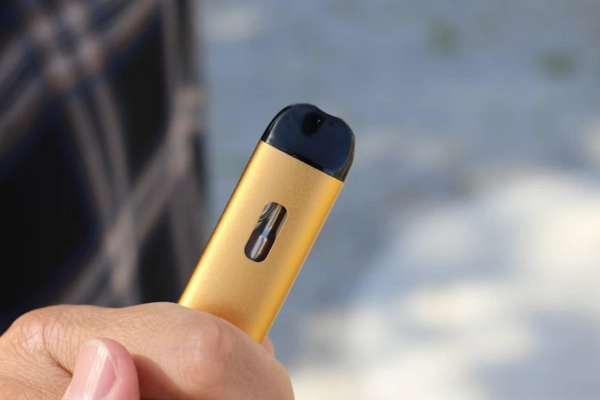
Vape cartridges and disposables have a shelf life of approximately six to twelve months under typical storage conditions, and up to two years for an unopened, properly stored cartridge. The primary degradation mechanisms are oxidation of the oil, which causes darkening and flavor changes, and viscosity changes from temperature fluctuations, which can cause leaking or clogging.
The most important rule for vape storage is orientation: always store cartridges and disposables upright, with the mouthpiece facing up. This keeps the oil centered around the coil and prevents it from pooling at the mouthpiece or settling in ways that cause air pockets and dry hits. Carts stored on their side for extended periods often develop persistent clogging issues that don’t resolve even when you return them to an upright position.
Temperature is the second critical factor. Vape oil thickens in cold temperatures and can crack hardware seals; it thins in heat and can leak. The ideal storage range is 60–70°F, the same as flower. Avoid leaving carts in a hot car, on a window ledge, or near any heat source. For very long-term storage (six months or more), a cool interior drawer or small wine cooler at 60–65°F is appropriate. Do not freeze vape products — the expansion and contraction of the oil can compromise seals and hardware.
Two signs that a vape cart has degraded are meaningful changes in color (distillate that has shifted from light amber to very dark brown has undergone significant oxidation) and a harsh, chemical, or off-putting taste that wasn’t present when the product was new. A change in vapor density alone is not necessarily a sign of degradation — it can reflect changes in room temperature or draw technique.
For disposables with batteries, keep the battery between 20% and 80% charge if storing for extended periods. Fully draining or fully charging a lithium battery before long-term storage reduces its lifespan. Most disposable hemp products are designed to reach their battery end-of-life around the same time as the oil is depleted, but if you’re stockpiling, this is worth accounting for.
How To Store Gummies, Edibles, And Infused Products
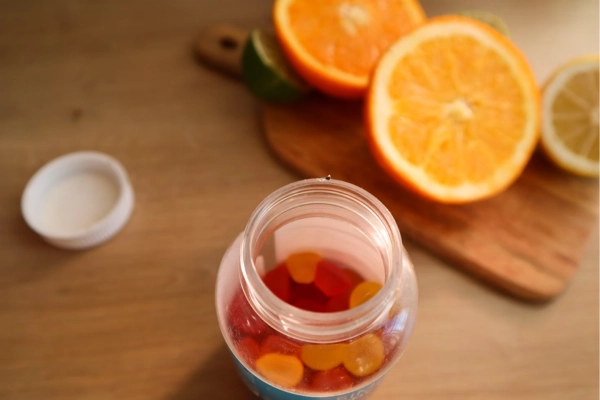
Delta-9 THC gummies and other hemp-derived edibles have a shelf life that is largely governed by their food components rather than by cannabinoid degradation. In most cases, the sugar, gelatin, pectin, or other binders in a gummy will degrade before the THC does — meaning your gummies may become dry, sticky, or off in texture before they lose meaningful potency.
Under standard storage conditions (cool, dark, sealed), commercially produced hemp gummies typically remain at full quality for six to twelve months from production date. Refrigeration extends this meaningfully: gummies stored in a sealed container in a refrigerator can maintain quality for twelve to eighteen months. Freezing extends it further still — frozen gummies stored in an airtight container can remain in good condition for two years or longer, and the THC content itself is highly stable at freezer temperatures.
The practical storage approach for a long-term supply of gummies is to divide your stock into portions. Keep one or two weeks of supply at room temperature in a sealed, opaque container away from heat and light. Refrigerate a one- to two-month supply. Freeze the remainder. This rotation system prevents the freeze-thaw cycling that can damage texture over time while ensuring most of your supply stays in the most stable possible condition.
Baked edibles — cookies, brownies, chocolates — follow the same principle, but their food components are considerably less shelf-stable than gummies. Baked goods kept at room temperature degrade within days to weeks. Refrigerated, they last one to two weeks. Frozen in airtight packaging, they can hold for several months. If you’re storing infused baked goods long-term, vacuum sealing before freezing is the most effective preservation method.
The THC and Delta-9 content in properly manufactured commercial edibles is highly stable compared to flower. Cannabinoids in a well-formulated gummy are protected from light and oxygen by the food matrix itself — degradation is slow and primarily affects texture and flavor rather than potency. A gummy that has dried out slightly is still likely to be close to full potency. Our Delta-9 gummies and mixed cannabinoid gummies remain fully legal in Texas after March 31 — they represent the practical long-term option for consumers looking for consistency beyond the smokable ban.
How To Store Tinctures And Oils
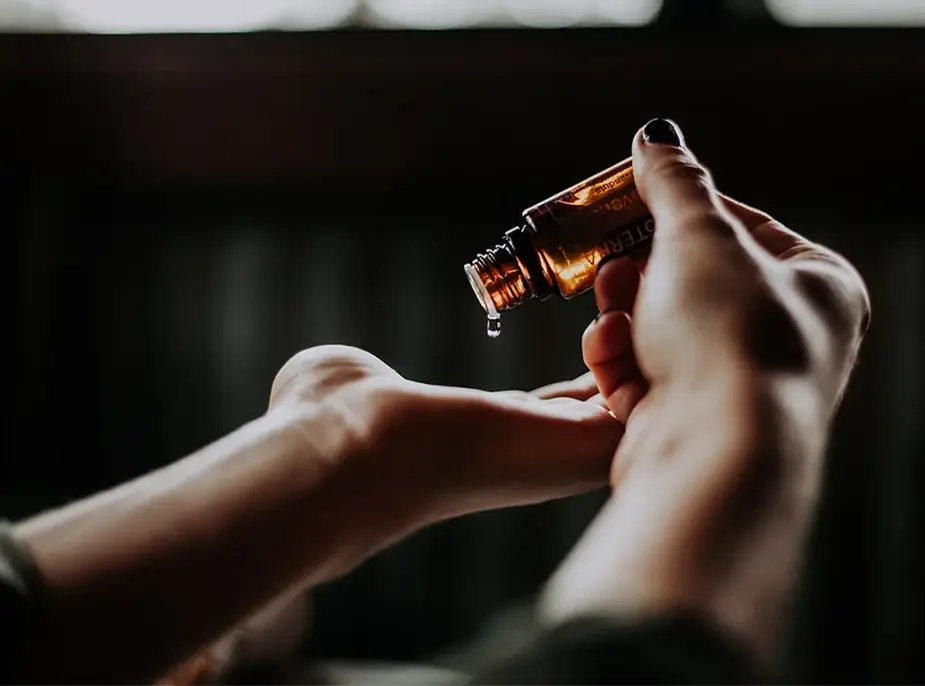
Hemp-derived tinctures and oils are among the most shelf-stable products in the cannabinoid category, primarily because the carrier oil or alcohol base provides significant protection against the oxidative degradation that affects flower. Alcohol-based tinctures in particular are extremely shelf-stable — the high-proof alcohol is itself a preservative, and an alcohol tincture stored properly in a sealed amber glass bottle in a cool, dark location can remain at full potency for three to five years or longer.
MCT oil-based tinctures (the most common format in the hemp market) are somewhat less stable than alcohol-based products because MCT oil itself can go rancid over time, though the timeline is considerably longer than flower. A properly stored MCT tincture under 60–70°F in an opaque or amber glass container should remain at full quality for twelve to twenty-four months. Refrigeration extends this to two years or beyond. The sign that an MCT tincture has degraded is an off, rancid, or unusual smell from the oil itself — cannabinoid degradation is typically secondary to oil degradation in this product format.
Amber glass is not optional for tinctures. The Fairbairn 1976 study and subsequent research consistently identify light as the primary degradation driver for cannabinoid solutions in carrier oils. Clear glass or clear plastic bottles left on a bright counter or shelf will degrade the cannabinoid content considerably faster than the same product in amber glass stored in a dark cabinet. Most quality hemp tinctures already ship in amber glass precisely for this reason; if your tincture came in clear packaging, transfer it or at minimum store it in a box or dark bag.
Store tinctures upright and ensure the dropper assembly is clean before returning it to the bottle. Contaminating the carrier oil with small amounts of biological material — saliva, food residue — can introduce microbial activity that degrades oil quality faster than any environmental factor. Dropper bottles are a vector for this; wipe the dropper and let it air dry briefly before resealing. Our full range of tinctures and oils is available in Austin.

How To Store Concentrates And Dabs
Concentrates — including shatter, wax, live resin, live rosin, budder, and distillate — have highly variable shelf lives depending on their specific formulation and consistency. Distillate is the most stable, followed by shatter. Live resin and live rosin contain significantly more terpenes and more complex molecular structures that degrade faster than isolated cannabinoid products.
The most important material decision for concentrate storage is container choice. Glass is definitively better than silicone for anything beyond very short-term use. Silicone does not leach chemicals into concentrates, but it is slightly gas-permeable over time — meaning terpenes can migrate through the silicone wall, causing off-flavors from the silicone itself while simultaneously depleting terpene content. For storage of more than a few days, a small borosilicate glass concentrate container with an airtight lid is the correct choice.
For shatter and distillate, refrigeration at 40–45°F maintains ideal consistency without causing the brittleness that makes shatter difficult to handle at very cold temperatures. For live resin and live rosin, which require the most careful handling to preserve their terpene profile, cold storage in a sealed glass container in the refrigerator is appropriate for one to three months; for longer-term storage, freezing in a sealed glass jar is effective. Allow frozen concentrates to return fully to room temperature before opening the container — the same condensation-prevention principle that applies to frozen flower.
Distillate is the easiest concentrate to store long-term because it has had most volatile terpene content removed during processing. Sealed distillate in glass at room temperature in a dark location maintains quality for twelve months or more. Distillate that has crystallized in storage — which can happen at cooler temperatures — has not degraded; gentle warming restores it to liquid consistency.
The Texas Stocking-Up Playbook: What To Buy And How To Store It Before March 31
Texas’s new DSHS rules restrict the retail sale of intoxicating hemp products in smokable form starting March 31, 2026. Retail sales are what the rule governs — not individual possession. If you legally purchased products before the enforcement date, those products remain yours to keep and use. The practical question for consumers is how to build a supply that will last through a period when retail availability changes, and how to store it so it remains in good condition.
The most important framing for this decision is to match your storage approach to how long you expect to need the supply and how much discipline you have around access. A single large reserve that you open repeatedly won’t last as long as the same quantity divided into a sealed long-term portion and a rotating short-term supply.
Think in tiers. A daily-use tier should be small — what you’ll realistically consume in two to three weeks — kept in a convenient sealed container with a humidity pack. A medium-term tier of one to three months’ worth should be in a well-sealed container in a cool, dark location that you access infrequently. A long-term reserve, if you’re building one, should be sealed, ideally vacuum-sealed or stored in a wine cooler, and touched as rarely as possible.
Prioritize products with the longest shelf life. For smokable hemp, whole flower stored correctly outperforms pre-rolls in shelf life because the paper adds a degradation variable. Moon rocks and snow caps, which have concentrate-coated surfaces, should be stored carefully — their terpene content is often higher than plain flower and needs the same humidity-controlled treatment. For the longest shelf life of any hemp product, tinctures and Delta-9 edibles are the clear answer — they remain legal after March 31 and maintain quality for considerably longer than any smokable product under the same storage conditions.
For first-in, first-out management: label your containers with the date of purchase and the strain or product. Rotate through your supply in chronological order so nothing sits past its ideal window while newer stock ages in place. This is straightforward discipline that makes a meaningful difference when you’re managing a supply over several months.
D8 Austin is clearing smokable hemp inventory at below-retail pricing ahead of the March 31 date. Our THCA flower, pre-rolls, and snow caps are available in-store at 9231 W Parmer Ln UNIT 102, Austin, TX 78717. Check the bulk discount page for current pricing on larger quantities. All products come with lab reports accessible through our shared lab reports folder — you can verify the exact cannabinoid profile of what you’re purchasing.
Quick-Reference Storage Table
The table below consolidates the core recommendations for each product type. These figures assume sealed storage in appropriate containers; poor storage conditions will produce significantly shorter shelf lives.
| Product type | Ideal temp | Best container | Good storage shelf life | Optimal storage shelf life |
| THCA flower / hemp flower | 60–70°F | Amber glass + Boveda pack | 6–12 months | 1–2+ years (frozen) |
| Pre-rolls | 60–70°F | Airtight glass tube or jar | 3–6 months | 6–12 months |
| Vape cartridges (unopened) | 60–70°F | Upright, sealed, dark | 6–12 months | Up to 2 years |
| Vape disposables | 60–70°F | Upright, sealed, dark | 3–6 months | 6–12 months |
| Delta-9 / hemp gummies | 60–70°F | Sealed opaque container | 6–12 months | 18+ months (refrigerated) |
| Baked edibles | 32–40°F (freezer) | Vacuum-sealed, frozen | Days at room temp | 2–3 months (frozen) |
| Tinctures (alcohol-based) | 60–70°F | Amber glass, sealed | 3–5 years | 5+ years |
| Tinctures (MCT oil) | 40–45°F | Amber glass, refrigerated | 12–18 months | 2+ years |
| Concentrates (distillate) | 60–70°F | Sealed glass | 12 months | 18–24 months |
| Concentrates (live resin/rosin) | 40–45°F | Sealed glass, refrigerated | 3–6 months | 6–12 months (frozen) |
| Shatter | 40–45°F | Sealed glass, refrigerated | 6–12 months | 12–18 months |
Frequently Asked Questions
Does weed go bad?
Hemp flower, THCA flower, and cannabis products do not go bad in the way food does — they don’t become dangerous to use — but they do degrade in quality over time. THC oxidizes into CBN, terpenes evaporate, and the flavor and potency profile of the product shifts. Research from the UNODC found that cannabis stored at room temperature loses approximately 16.6% of its THC content per year. Proper storage in a cool, dark, airtight container dramatically slows this process and can extend the useful life of flower to twelve months or longer.
How long does hemp flower last?
Hemp flower stored under good conditions — sealed in an amber glass jar with a 62% Boveda humidity pack at 60–70°F in a dark location — will typically maintain most of its quality for six to twelve months and remain usable for twelve to twenty-four months. Flower stored in poor conditions (plastic bags, warm temperatures, exposure to light) can degrade noticeably in as little as four to eight weeks.
Do edibles expire?
Commercially produced hemp gummies have a shelf life of six to twelve months at room temperature and twelve to eighteen months or longer when refrigerated. The food components in gummies — gelatin, sugar, pectin — typically degrade before the cannabinoid content does, meaning texture and flavor may change before potency declines significantly. Frozen gummies in sealed containers can maintain quality for up to two years. Always check the manufacturer’s labeled expiration date as a baseline.
Can you freeze THCA flower?
Yes, and for long-term storage of two years or more, freezing is the most effective preservation method. The key is to prevent trichome breakage: freeze in a sealed, humidity-stable container and allow the jar to return completely to room temperature before opening. Never handle frozen flower while it’s still cold. Research by Turner et al. found that THC degradation rates at freezer temperatures are nearly half of what occurs at room temperature.
What is the ideal humidity for storing hemp flower?
The ideal relative humidity for hemp flower storage is 59–63%. Above 65% RH, mold and mildew become a meaningful risk. Below 55% RH, trichomes become brittle and break off, reducing both potency and quality. Boveda and Integra Boost both make two-way humidity control packs that passively maintain specific RH levels — the 62% Boveda pack is the standard recommendation for most consumer storage applications.
Does THCA convert to THC in storage?
THCA can decarboxylate to Delta-9 THC through heat exposure during storage. This process requires meaningful heat exposure — it does not occur at ambient room temperature at a rate that would noticeably alter the product. However, storing THCA flower in consistently warm environments (above 77°F) does meaningfully accelerate this conversion. For Texas consumers, this is relevant both for potency preservation and, in the context of the new DSHS total-THC testing formula, for maintaining the product’s original cannabinoid profile.
What’s the best container for long-term cannabis storage?
For flower: an amber glass wide-mouth mason jar with a Boveda 62% humidity pack is the most practical choice for most consumers. CVault stainless steel containers with built-in humidity pack holders are the premium option. For concentrates: small borosilicate glass containers with airtight lids are the correct choice over silicone. For tinctures: amber glass dropper bottles. For gummies: the original sealed packaging or a resealable opaque glass or plastic container.
D8 Austin is a licensed hemp retailer located at 9231 W Parmer Ln UNIT 102, Austin, TX 78717. All products are third-party lab tested and compliant with applicable Texas and federal hemp regulations at the time of sale. Lab reports for all products are available through our lab reports page. This content is for educational purposes only and does not constitute medical or legal advice. Hemp-derived products are intended for adult use only. For more on how Texas’s March 31, 2026 rule change affects the smokable hemp market, see our full breakdown: Texas Smokable Hemp Ban Takes Effect March 31, 2026.